 Today's awesome guest is so awesome she maintains two active blogs and manages to provide quality content on each. It's been fun following her thoughts on villains recently. And she has one book due to be released later this year and another one come fall of next year.
I love the insight Liesel has on a variety of topics, how she engages her blogs' readers and how actively she interacts with them.
Her post today poses questions regarding how much information about a character is too much. She has an interesting perspective and viewpoint. Be sure to leave her a comment and let her know your thoughts.
So, without further delay, I give to you the awesome Liesel Hill!

Characters: Is It All Relevant?
by
Liesel Hill
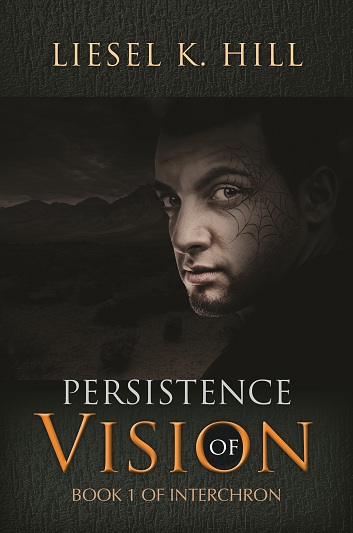
Some weeks ago, a member of my writer’s group said something important to me. (If you’re not a believer, writers groups: invaluable. Trust me! But that’s another post.) She was reading a chapter of the second installment of my Interchron series and she said to me (I’m paraphrasing), “There is a lot of tension in these scenes, but it seems to me that ALL the characters are pacing their nervousness off. Maybe have a few of them do something else. They wouldn’t all have the same nervous tick, would they?”
I grumbled a bit at first, but she was right. The argument could be made that people do tend to mimic one another, especially when they spend a good deal of time together (don’t try to argue; we all know it’s true!) but for fiction, we must make our characters unique. They must stand out from one another. (As in: Characterization 101!)
This led to me thinking a lot about my characters and if I was differentiating them from one another enough. Let’s talk about character charts. These are the worksheets that have (sometimes hundreds) of questions about your character. The idea is that if you can answer all these questions, you’ll know your character well enough to write them.
 I know I’ll probably take some heat for saying this, but I’m not a fan of character charts. Of course I am all about knowing your characters, so I understand the concept, but to be honest, I just get bored with them. I mean come on! Is it direly important that we know that Luke Skywalker favored the color blue over brown? A fun factoid, maybe, but it’s not going to change his destiny, our emotions about the story, or the way he approaches his father. Will it make a huge difference if we understand that Harry Potter favors vanilla ice cream over chocolate? Again, it may be important if you ever go on a date with aforementioned boy wizard, but since most of us won’t...
Don’t get me wrong: I understand that mundane details can make our characters human, and I’m all for that. I’m just not a writer who goes into a lot of detail about the color shirt my hero is wearing or what kind of food my heroine prefers.
So what’s my point? In my opinion, the questions we should be asking are the deeper ones. Who is this character? Who or what made him that way? If someone stuck a gun in his face, how would he react? If he saw a large person beating up on a smaller person, would he do anything about it? If given the chance to cheat or in some way be dishonest to benefit himself, would he do it? How does he feel about the religious, political, and social climates of his world? If he could have one thing, what would it be?
These are the questions that will tell us who our characters really are.
 Even JK Rowling had to answer these questions. We see the bigger issues in how Harry feels about the pure blood vs. mud-blood feud; in how unfairly house elves are treated; in how he deals with his best friend’s family being poor; and in what he saw in the mirror of Erised.
Of course every story is different. Using the same example, JK Rowling also used a lot of fun, mundane details in her narrative because they made for a colorful world, which is appropriate for the audience she was writing for.
If you’re writing YA, then high school popularity, how the character feels about school subjects, and who their first kiss was may be appropriate to the story. If, on the other hand, you’re writing adult crime drama, your readers don’t necessarily need to know these details about the tough-as-nails detective who’s trying to solve the case.
My point is that any and all characterization details you include in your story need to be relevant.
And what about describing them? Per my writer’s group critique, I’ve taken to describing my character’s reactions to every major emotion. For example, I was recently putting together a character sketch for a new high fantasy project. I wrote about two pages of stuff about one of my main characters, whose name is Wenlyn. For his major emotional reactions, I have this:
- When angry, he clenches his teeth and growls.
- When worried/scared, his eyes get wide and he stands perfectly still.
- When happy, he smiles; when excessively happy, he jumps around in a stationary circle.
- When sad, he clamps his eyes shut and turns away.
- When feeling vulnerable/lonely/abandoned, he clutches people. (This is important because Wenlyn is an orphan with no past, no history, and no family to speak of.)
- When jealous, he presses his lips together and gets color in his cheeks.
These were the major emotions I came up with that Wenlyn may have to deal with in his story. Now I’ll be able to describe his reactions in a distinctive way that sets him apart from his fellow characters.
I have found that describing reactions to specific emotions and asking the deep, hard questions are the best way to have full, round, effective characterizations. These characters will ring true to your readers and jump off the page into reality.
Thanks for reading! :D
About Liesel Hill:

Check out her Musings on Fantasia blog.
Follow her on Twitter @lkhillbooks and Facebook.


